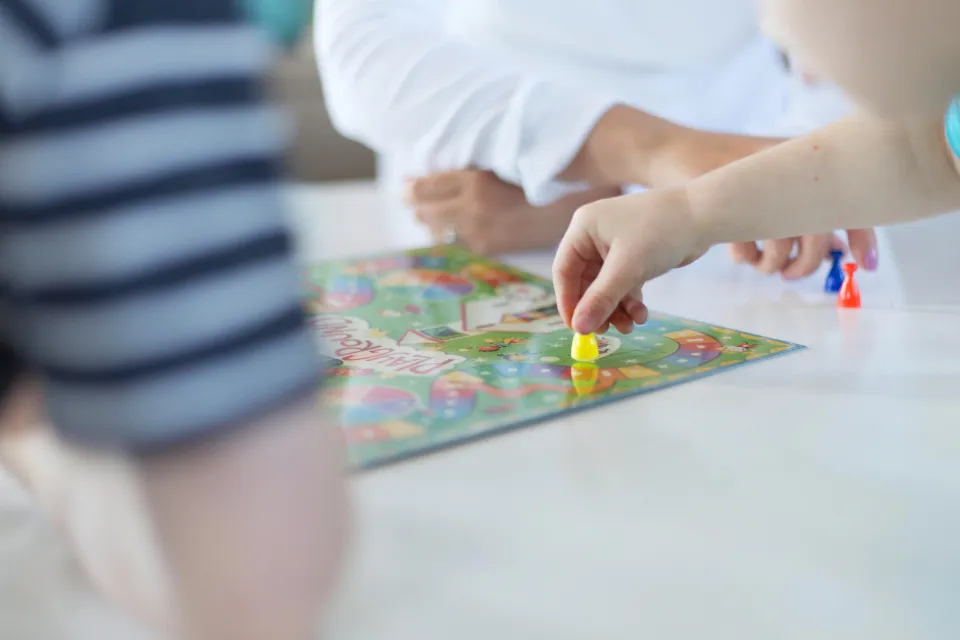
The best family board games for beginners are short, easy to teach and keep everyone involved on every turn. Start with simple game types such as cooperative, roll-and-move, matching or party games, match the game to the youngest player’s age, and keep your first sessions under an hour so game night stays fun.
This beginner’s guide from Voozon.com explains the main types of board games, how common game mechanics work, and how to run a family game night that people actually want to repeat.
Key Takeaways
- Choose games by type and mechanic, not by hype, so they suit your family’s ages and interests.
- Cooperative games are ideal when competition causes tears or arguments.
- Check the age range, player count and playing time printed on the box before you buy.
- Teach games in short steps and play a practice round before keeping score.
- A regular, screen-free game night builds connection, patience and problem-solving skills.
Why Family Board Games Are Worth Your Time
Board games bring everyone to the same table without screens competing for attention. They create shared jokes, friendly rivalry and a natural reason to talk, which can be rare on busy weekdays.
Games also give children practice with taking turns, following rules, counting, planning ahead and handling disappointment. The American Academy of Pediatrics’ guide to the power of play explains how games help children plan, get along with others and regulate their emotions.
A night in around the table is also a budget-friendly form of entertainment. If you are planning family spending, our explainer on the 50/30/20 budget rule shows how to make room for fun without overspending.
The Main Types of Family Board Games
You do not need to know specific titles to choose well. Understanding the main categories helps you browse any shop or library and pick games that suit your household. The table below is the quick overview we use at Voozon.com.
| Game type | How it works | Best for |
|---|---|---|
| Roll-and-move | Players roll dice and move pieces along a track | Young children learning counting and turn-taking |
| Matching and memory | Players find pairs or remember hidden cards | Mixed ages, short sessions |
| Cooperative | Everyone works together against the game itself | Families who dislike direct competition |
| Party and word games | Drawing, guessing, acting or describing words | Larger groups, older children and adults |
| Tile-laying | Players place tiles to build a map or pattern | Calm, visual thinkers |
| Light strategy | Players collect resources or cards to score points | Older children ready for planning ahead |
Cooperative Games
In cooperative games, the whole table wins or loses together. They are excellent for younger children and for families where losing tends to end the evening early, because adults can guide decisions without taking over.
Competitive Games With Light Rules
Simple competitive games teach good sportsmanship. Look for games where players who fall behind still have a chance to catch up, which keeps everyone engaged until the final turn.
Common Game Mechanics Explained
A mechanic is the core action you repeat on your turn. Knowing a few common ones helps you read a game’s description and predict whether your family will enjoy it.
- Dice rolling: luck decides movement or outcomes, which levels the playing field between ages.
- Set collection: players gather matching cards or items to score points.
- Pattern building: players arrange tiles or pieces to create shapes and score.
- Hand management: players choose which cards to play and when.
- Deduction: players use clues to work out a hidden answer.
- Drafting: players take turns choosing from a shared pool of cards or tiles.
Luck Versus Strategy
Games with more luck suit younger players because anyone can win. Games with more strategy reward planning and tend to suit older children and teenagers. Many good family games mix both, so experienced players have choices while newer players still have a fair chance.
How to Choose the Right Game for Your Family
Before you buy or borrow a game, check the information printed on the box. It usually tells you most of what you need to know.
- Age range: follow the youngest player’s age, and note any small-parts warnings for little children.
- Player count: make sure the game works well with the number of people in your household.
- Playing time: for beginners, aim for games that finish in 15 to 45 minutes.
- Rule complexity: read a short rules summary or watch a teaching video before you play.
- Interests: pick themes your family already enjoys, such as animals, space or puzzles.
Many libraries and community centres lend games, which is a great way to try different types before buying. Some schools also use games for learning, and you can find more ideas in our Education section.
How to Run a Great Family Game Night
A good game night depends as much on the setting as on the game. Keep it relaxed, predictable and short enough that everyone leaves wanting more.
Set Simple Ground Rules
Agree on a few rules before you start: phones away, no gloating, and anyone can ask for help. Putting devices in another room makes a real difference; our tips to reduce screen time can help you make game night a regular screen-free habit.
Teach in Small Steps
Explain the goal first, then the actions on a turn, then how the game ends. Play an open practice round with cards face up, and save the finer rules for when they come up.
Make It a Habit
Choose a regular slot, such as one evening a week, and let family members take turns picking the game. If some evenings call for a film instead, our guide on how to choose a streaming service helps you keep that side of family entertainment simple too. For more ideas, browse the Entertainment section.
Whatever you play, the aim is time together. Voozon.Com’s editorial team publishes more family and lifestyle guides to help you plan evenings everyone enjoys.
Frequently Asked Questions
What age can children start playing board games?
Many children can enjoy very simple matching or roll-and-move games from preschool age, with adult help. Always check the age range and small-parts warnings on the box. As children grow, introduce cooperative games, then games with more choices and strategy, adjusting to their attention span and interest at each stage.
How do I stop arguments during game night?
Choose cooperative games when competition is causing tension, and agree on ground rules before you start. Keep games short, praise good effort rather than just winning, and model calm behaviour when you lose. Taking a short break or switching to a lighter game is better than pushing through a frustrating session.
Are family board games good for learning?
Yes, many board games naturally practise skills like counting, reading, memory, planning and turn-taking. They also build social skills such as patience and handling disappointment. The learning happens through play, so children often build these skills without feeling like they are being taught, which makes games a useful addition to family time.
How long should a family game night last?
For beginners and younger children, 30 to 60 minutes is usually enough. That might mean one longer game or two short ones. Ending while everyone is still enjoying themselves makes people look forward to the next session, which matters more than finishing a long game in one sitting.